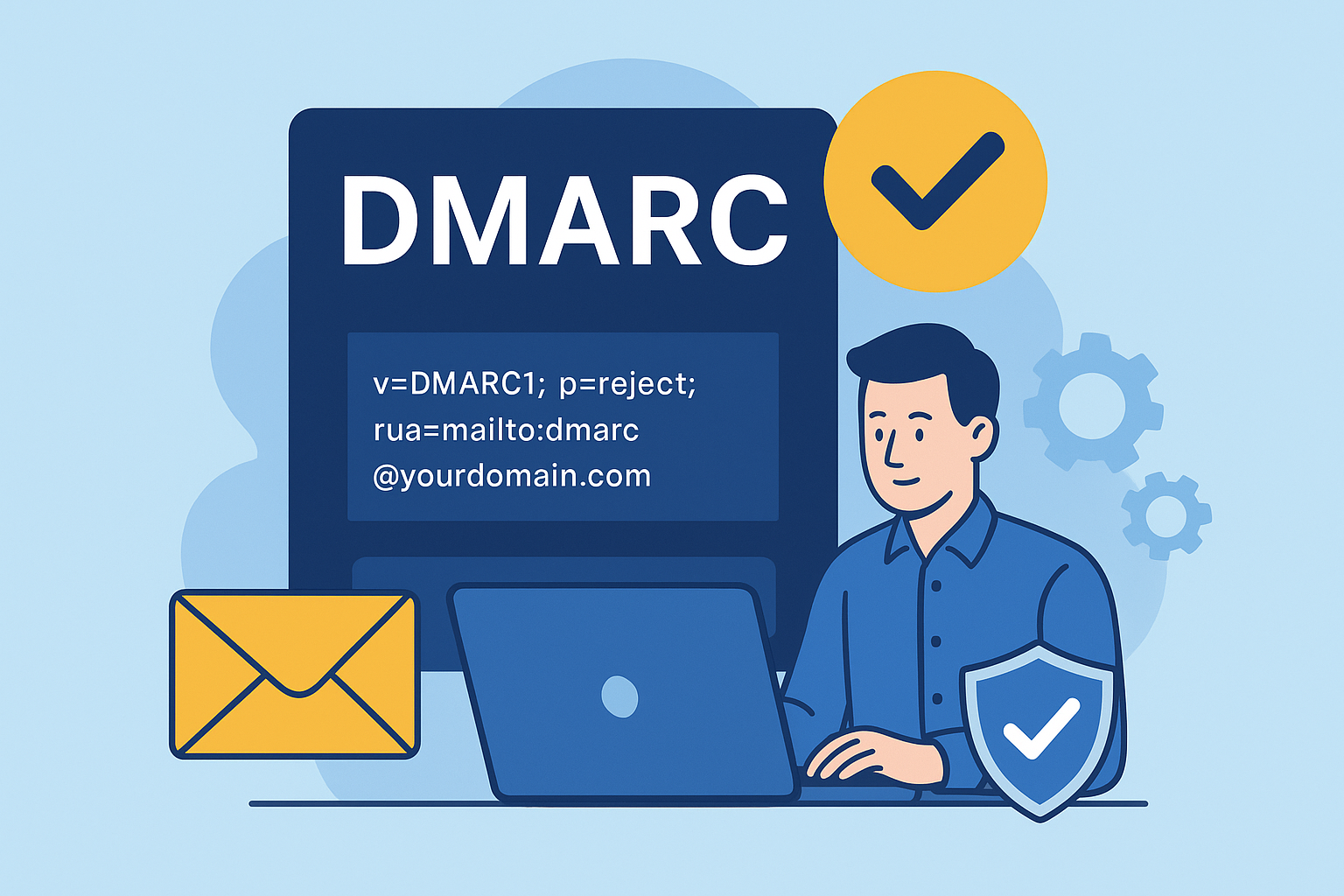
Email remains one of the most common communication channels for businesses—and unfortunately, one of the most targeted for cyberattacks. Phishing, spoofing, and email impersonation continue to rise, putting brands and customers at risk. That’s where DMARC (Domain-based Message Authentication, Reporting & Conformance) comes in. As an essential layer of modern email security, DMARC helps organizations protect their domain from being used in fraudulent emails while improving deliverability and increasing visibility into how their domain is being used.
What Is DMARC?
DMARC is an email authentication protocol that works alongside SPF (Sender Policy Framework) and DKIM (DomainKeys Identified Mail). It tells receiving mail servers what to do when an email fails authentication and provides reporting so you can see who is sending mail on behalf of your domain—both legitimate systems and potential attackers.
Key Benefits of Implementing DMARC
1. Protects Your Brand From Email Spoofing
DMARC helps prevent attackers from forging your domain in phishing campaigns. By enforcing authentication rules, DMARC significantly reduces the risk of your customers, employees, or partners receiving fraudulent messages appearing to come from you.
2. Improves Email Deliverability
Many email providers—such as Google, Microsoft, and Yahoo—prioritize authenticated email. When your SPF, DKIM, and DMARC policies are properly configured, your legitimate emails are more likely to reach inboxes instead of spam folders.
3. Provides Visibility Into Email Traffic
DMARC generates reports that show:
- Who is sending email using your domain
- Whether SPF and DKIM are passing or failing
- Which unauthorized sources may be attempting to spoof your domain
These insights allow you to identify misconfigurations, shadow IT systems, and malicious activity.
4. Helps Maintain Regulatory and Security Compliance
For organizations in regulated industries—such as healthcare, finance, or government—DMARC is increasingly required or strongly recommended as part of email security best practices.
5. Strengthens Your Organization’s Overall Cybersecurity Posture
By reducing spoofing and improving message authentication, DMARC plays a crucial role in defending your business against social engineering and credential theft attacks.
How to Implement DMARC on Your Domain
Implementing DMARC is a multi-step process that includes SPF and DKIM setup, monitoring, and policy enforcement. Here’s the recommended workflow:
1. Ensure SPF and DKIM Are Properly Configured
Before adding DMARC, verify that:
- Your SPF record includes all legitimate sending services
- DKIM is enabled and using a valid selector
Without these, DMARC cannot function properly.
2. Publish a DMARC Record
You add DMARC to your domain DNS as a TXT record at:
_dmarc.yourdomain.com
A basic “monitor only” record looks like this:
v=DMARC1; p=none; rua=mailto:dmarc@yourdomain.com;
p=none means you’re only collecting data at this stage—not blocking any email.
3. Monitor DMARC Reports
For 2–4 weeks, evaluate:
- Who is sending mail using your domain
- Whether authentication is passing
- Whether any unauthorized sources appear
Many tools can help interpret these reports, such as DMARCian, Valimail, and Agari.
4. Gradually Increase Policy Enforcement
Once you understand your email ecosystem, increase the enforcement level:
- p=quarantine – suspicious emails go to spam
- p=reject – unauthenticated messages are blocked entirely
A full enforcement setting of p=reject provides the strongest protection against spoofing.
5. Maintain Ongoing Monitoring
Even after full enforcement, regularly review reports to ensure:
- New services are properly added to SPF/DKIM
- No unauthorized senders appear
- No sudden authentication failures occur
Consider a managed service such as Sophos DMARC Management to help manage and monitor your domain and keep it up to date.
DMARC is no longer optional for businesses that rely on email—it’s a critical defense against phishing, brand impersonation, and increasingly sophisticated cyber threats. By implementing DMARC with proper SPF and DKIM configuration, monitoring your reports, and gradually increasing enforcement, you can significantly strengthen your organization’s email security while improving deliverability and brand trust.
Recent Posts
-
 VU#976247: Antivirus and Endpoint Detection and Response Archive Scanning Engines may not properly scan malformed zip archives
 -
 Is Your Data Safe? The Privacy and Security Risks of Using AI You Need to Know
 -
VU#772695: A flawed TLS handshake implementation affects Viber Proxy in multiple platforms
-
VU#431821: MS-Agent does not properly sanitize commands sent to its shell tool, allowing for RCE
-
 Microsoft testing Windows 11 batch file security improvements